Satisfy your curiosity and ace GP with these books!
- Jan 25, 2018
- 6 min read
Do you feel the urge increase your general knowledge? Here are our top picks to help you ace that GP paper!
The Magic of Reality: How We Know What's Really True
New York Times bestseller

Richard Dawkins, bestselling author and the world’s most celebrated evolutionary biologist, has spent his career elucidating the many wonders of science.
Here, he takes a broader approach and uses his unrivaled explanatory powers to illuminate the ways in which the world really works.
Filled with clever thought experiments and jaw-dropping facts, The Magic of Reality explains a stunningly wide range of natural phenomena: How old is the universe? Why do the continents look like disconnected pieces of a jigsaw puzzle? What causes tsunamis? Why are there so many kinds of plants and animals? Who was the first man, or woman?
Starting with the magical, mythical explanations for the wonders of nature, Dawkins reveals the exhilarating scientific truths behind these occurrences. This is a page-turning detective story that not only mines all the sciences for its clues but primes the reader to think like a scientist as well.
The Man Who Mistook His Wife For A Hat: And Other Clinical Tales
by Oliver Sacks

In his most extraordinary book, recounts the case histories of patients lost in the bizarre, apparently inescapable world of neurological disorders.
Oliver Sacks’s The Man Who Mistook His Wife for a Hat tells the stories of individuals afflicted with fantastic perceptual and intellectual aberrations: patients who have lost their memories and with them the greater part of their pasts; who are no longer able to recognize people and common objects; who are stricken with violent tics and grimaces or who shout involuntary obscenities; whose limbs have become alien; who have been dismissed as retarded yet are gifted with uncanny artistic or mathematical talents.
If inconceivably strange, these brilliant tales remain, in Dr. Sacks’s splendid and sympathetic telling, deeply human. They are studies of life struggling against incredible adversity, and they enable us to enter the world of the neurologically impaired, to imagine with our hearts what it must be to live and feel as they do. A great healer, Sacks never loses sight of medicine’s ultimate responsibility: “the suffering, afflicted, fighting human subject.”
“One of the great clinical writers of the twentieth century”
-- The New York Times
Sapiens: A Brief History of Humankind
by Yuval Noah Harari
New York Times bestseller

From a renowned historian comes a groundbreaking narrative of humanity’s creation and evolution that explores the ways in which biology and history have defined us and enhanced our understanding of what it means to be “human.”
One hundred thousand years ago, at least six different species of humans inhabited Earth. Yet today there is only one—homo sapiens. What happened to the others? And what may happen to us?
Most books about the history of humanity pursue either a historical or a biological approach, but Dr. Yuval Noah Harari breaks the mold with this highly original book that begins about 70,000 years ago with the appearance of modern cognition.
From examining the role evolving humans have played in the global ecosystem to charting the rise of empires, Sapiens integrates history and science to reconsider accepted narratives, connect past developments with contemporary concerns, and examine specific events within the context of larger ideas.
Dr. Harari also compels us to look ahead, because over the last few decades humans have begun to bend laws of natural selection that have governed life for the past four billion years. We are acquiring the ability to design not only the world around us, but also ourselves. Where is this leading us, and what do we want to become?
Featuring 27 photographs, 6 maps, and 25 illustrations/diagrams, this provocative and insightful work is sure to spark debate and is essential reading for aficionados of Jared Diamond, James Gleick, Matt Ridley, Robert Wright, and Sharon Moalem.
"I would recommend this book to anyone interested in a fun, engaging look at early human history…you’ll have a hard time putting it down."
--Bill Gates
"Thank God someone finally wrote [this] exact book."
--Sebastian Junger
The Body Keeps the Score: Brain, Mind, and Body in the Healing of Trauma
by Bessel van der Kolk M.D.
New York Times bestseller

A pioneering researcher transforms our understanding of trauma and offers a bold new paradigm for healing Trauma is a fact of life.
Veterans and their families deal with the painful aftermath of combat; one in five Americans has been molested; one in four grew up with alcoholics; one in three couples have engaged in physical violence. Dr. Bessel van der Kolk, one of the world’s foremost experts on trauma, has spent over three decades working with survivors.
In The Body Keeps the Score, he uses recent scientific advances to show how trauma literally reshapes both body and brain, compromising sufferers’ capacities for pleasure, engagement, self-control, and trust. He explores innovative treatments—from neurofeedback and meditation to sports, drama, and yoga—that offer new paths to recovery by activating the brain’s natural neuroplasticity.
Based on Dr. van der Kolk’s own research and that of other leading specialists, The Body Keeps the Score exposes the tremendous power of our relationships both to hurt and to heal—and offers new hope for reclaiming lives.
“Packed with science and human stories, the book is an intense read. . . . The struggle and resilience of [van der Kolk’s] patients is very moving.”
—New Scientist
A World History
By William McNeill
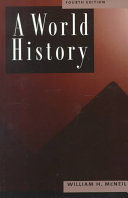
Global in scope, William McNeill's widely acclaimed one-volume history emphasizes the four Old World civilizations of the Middle East, India, China, and Europe, paying particular attention to their interaction across time as well as the impact on historical scholarship in light of the most recent archaeological discoveries.
The engaging and informative narrative touches on all aspects of civilization, including geography, communication, and technological and artistic developments, and provides extensive coverage of the modern era. This new edition includes a thoroughly updated bibliographic essay and a new discussion of the most significant events in world history and civilization since 1976.
An Incomplete Education: 3,684 Things You Should Have Learned but Probably Didn't
By Judy Jones
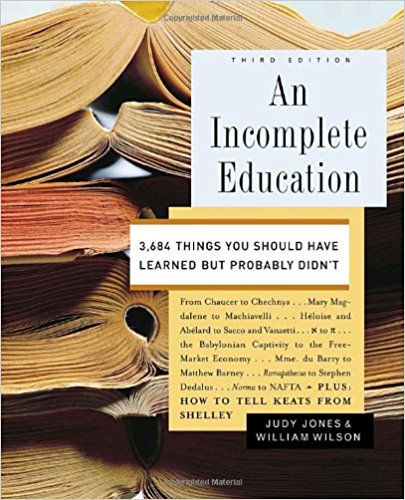
How do you tell the Balkans from the Caucasus? What’s the difference between fission and fusion? Whigs and Tories? Shiites and Sunnis? Deduction and induction? Why aren’t all Shakespearean comedies necessarily thigh-slappers? What are transcendental numbers and what are they good for? What really happened in Plato’s cave? Is postmodernism dead or just having a bad hair day? And for extra credit, when should you use the adjective continual and when should you use continuous? An Incomplete Education answers these and thousands of other questions with incomparable wit, style, and clarity. American Studies, Art History, Economics, Film, Literature, Music, Philosophy, Political Science, Psychology, Religion, Science, and World History: Here’s the bottom line on each of these major disciplines, distilled to its essence and served up with consummate flair. In this revised edition you’ll find a vitally expanded treatment of international issues, reflecting the seismic geopolitical upheavals of the past decade, from economic free-fall in South America to Central Africa’s world war, and from violent radicalization in the Muslim world to the crucial trade agreements that are defining globalization for the twenty-first century. And don’t forget to read the section A Nervous American’s Guide to Living and Loving on Five Continents before you answer a personal ad in the International Herald Tribune. As delightful as it is illuminating, An Incomplete Education packs ten thousand years of culture into a single superbly readable volume. This is a book to celebrate, to share, to give and receive, to pore over and browse through, and to return to again and again.
Anne Frank: The Diary of a Young Girl
By Anne Frank

Discovered in the attic in which she spent the last years of her life, Anne Frank’s remarkable diary has become a world classic—a powerful reminder of the horrors of war and an eloquent testament to the human spirit. In 1942, with the Nazis occupying Holland, a thirteen-year-old Jewish girl and her family fled their home in Amsterdam and went into hiding. For the next two years, until their whereabouts were betrayed to the Gestapo, the Franks and another family lived cloistered in the “Secret Annexe” of an old office building. Cut off from the outside world, they faced hunger, boredom, the constant cruelties of living in confined quarters, and the ever-present threat of discovery and death. In her diary Anne Frank recorded vivid impressions of her experiences during this period. By turns thoughtful, moving, and surprisingly humorous, her account offers a fascinating commentary on human courage and frailty and a compelling self-portrait of a sensitive and spirited young woman whose promise was tragically cut short.
“One of the most moving personal documents to come out of World War II.”
—The Philadelphia Inquirer “The single most compelling personal account of the Holocaust . . . remains astonishing and excruciating.”
—The New York Times Book Review
Have fun reading!
- The Library Club
Comments